Drumbeat
Apps suck. Generally.
Why PWAs matter, why self-hosting matters more, and why the full stack has to be designed together.
Apps suck. Generally.
But Progressive Web Apps (PWAs) are apps where the code runs only in the web browser, offline, and cached to the device. The data can be cached to the device, but it doesn’t have to be. They work offline, or with a spotty connection, after the initial load.
PWAs are great because Apple and Google can’t limit their distribution. Or imprint the perverse incentives of algorithmically boosting apps that yield 30% to Apple or Google, either by charging us directly or making us the product.
The problem with Progressive Web Apps is that they can still “phone home” our data to whoever served the app in the first place. If Meta makes a progressive web app, it might work offline, but that doesn’t mean your data or privacy is safe when you use it.
But PWAs can be self-hosted by users, meaning the app is served by the user’s own non-phone hardware, wherever that may be. This helps, but what normal person has a server to host apps? And if you did, what apps would you even serve? The friction is too much. Where do you begin?
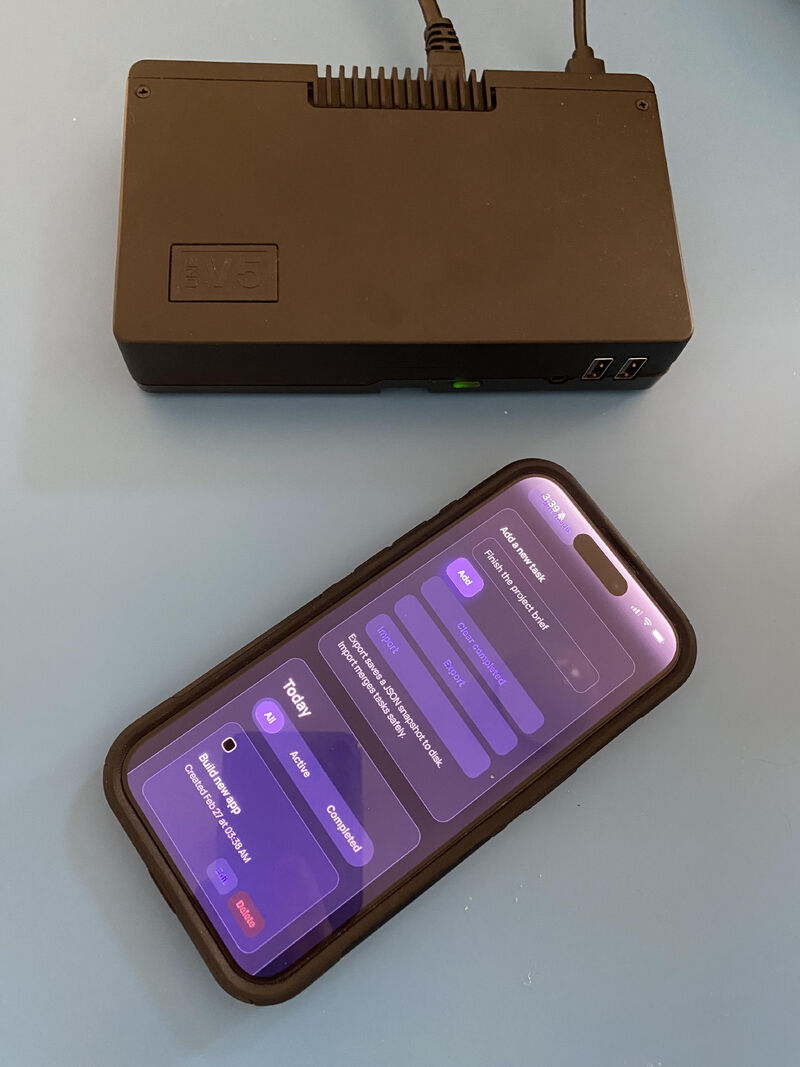
This image is of an open-source hardware device called OurBox, this one uses a common Raspberry Pi, running free and open-source software: a to-do PWA. It’s called OurBox OS.
If you get your hands on a Raspberry Pi, you could replicate this setup for yourself today.
PWAs are nice, but self-hosted PWAs are better. But there are too many links in the chain for enough people to adopt self-hosted PWAs to make a difference. Tech of Our Own designs the full stack, from motherboard choice to the self-hosted database to the app’s HTML, and makes it all free and open source.
It has to be this way so that we can keep using our banking app while weaning ourselves off the apps that spy on us and extort us.